
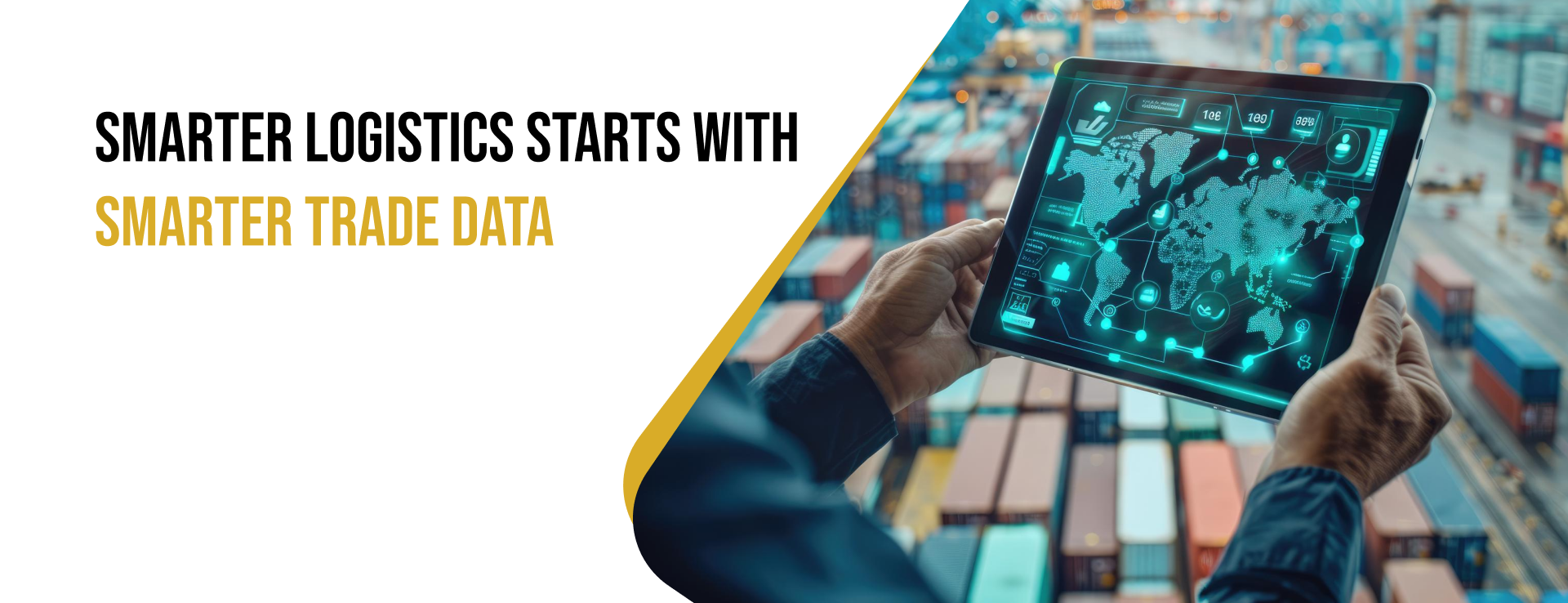

How Logistic Companies Can Benefit from Global Trade Data
For a long time, the logistics industry operated on experience - knowing which routes usually operate and which are reliable carriers. But that’s changing today. The real advantage for them comes from knowing exactly where goods are moving, who is shipping them, and how often.
The global trade data has changed that uncertainty into measurable advantages. Shipment records, import export data, trade flows by lane and commodity, help logistics businesses to make informed decisions. Trade data is no longer a luxury for your business, but a fundamental tool for anyone in the freight logistics space who want to grow faster.
In this blog, you will explore seven practical ways freight logistic companies use trade intel data to make better decisions, respond faster to market changes, and drive sustainable growth.
Why Does Global Trade Data Matter for Logistic Companies?
Trade intelligence is like a high-powered lens for your business. Most logistic companies struggle with similar issues like they don’t know who needs their services until those potential clients are already tied to a competitor. By using a reliable trade database, business in logistics can understand market shifts before time, and respond quickly to changing customer demands and industry trends. With real shipment data it’s easier to track which companies are moving volume, which ports are busy, and where the supply chain gaps actually are. Trade data turns the entire import export data into an actionable insight that supports smarter planning and business growth.
Here are seven ways logistics companies can benefit from global trade data:
1. Support Strategic Expansion into New Markets
One of the harder calls for logistics companies is deciding which markets to enter. The cost is real when you make one wrong decision. Office setup and local hires consumes both time and costs money. Global trade data reduces that uncertainty by showing international demand trends, which country imports and exports larger volumes of goods, and much more. This is especially beneficial for businesses in freight forward as it helps in identifying emerging markets.
2. Discover High-Potential Importers and Exporters
Cold prospecting in logistics is mostly a numbers game: call enough people, eventually someone has freight that needs moving. It works, but it's inefficient. A lot of time goes into conversations with companies that either don't ship at the volumes you handle or aren't active on routes you cover. Shipment data changes the targeting. You can identify importers and exporters who are genuinely active on specific trade lanes, see how frequently they ship, and understand what commodities they're moving. That's a qualified list, not a cold one.
3. Optimize Routes and Trade Lane Planning
The best-performing freight logistics businesses understand that efficient transportation starts with understanding where cargo is moving. Global trade data provides you data that shows where trade flows are concentrating, which lanes are growing, and where new origin-destination pairs are emerging. If a commodity category starts showing up in volume between two origins that haven’t traded heavily previously, that's a hint worth acting on early.
4. Build Pricing Strategies for Potential Clients
Understanding the market is important to set competitive pricings and it's also hard to win a bid if you don’t know what the competition is charging. Global trade data provides details about shipping volumes, destination markets, and trading patterns that helps to quote better pricings. Trade data also allows you to remain competitive without sacrificing your margins. For example, if you know a prospect ships a particular lane at a specific frequency, you can price around their actual pattern rather than trying to fit them into a standard rate structure.
5. Gain Competitive Market Intelligence
Ever thought who your biggest competitors are working with? Global trade data helps you by reflecting on your competitor’s activities. Seeing which carriers they use and which clients they serve gives you a massive advantage in positioning your own services and identifying where you can out-perform them. Not just that but a detailed trade database also reveals shipment patterns across different industries. If any product category begins recording higher shipment volumes or gains a new momentum, using these insights support sustainable business development.
6. Reduce Supply Chain and Market Risks
Supply chain disruptions don't appear without warning. The warning just goes unnoticed because nobody was watching the right signals early enough. Global trade data gives freight logistics businesses early indicators of where strain is building. If import volumes on a specific corridor are climbing sharply while port congestion is rising simultaneously, that's worth flagging to clients before it becomes a problem. If a key supplier country shows a sudden drop in export volumes for a commodity category, the downstream freight demand implications are already visible in the trade data.
7. Spot Seasonal Trends and Peak Demand Period
Almost every industry has a peak season and using trade data helps you forecast these spikes. Logistics companies that know these patterns in advance can plan capacity, lock in better carrier rates, and price their own services more accurately. Peak season preparation is where early visibility pays off most directly. If you know a specific importer typically doubles shipment frequency between August and October, you can lock in carrier space and price that period proactively rather than scrambling when the bookings arrive all at once.
Wrapping Up
The logistics industry is becoming increasingly data-driven. The companies who still rely entirely on the existing relationships are limiting their own growth. The freight market is very large and what you need to do is to track trade flows, shipment frequencies, emerging corridors, active importers and exporters for a successful trade.
Global trade data is an operational tool for freight logistic companies as it’s useful for prospecting, lane planning, pricing, and risk management. If you're a logistics company looking to use trade data to identify high-value shippers, analyse growing lanes, or build smarter prospecting pipelines, EX-IM by The Dollar Business is for you. You get real time importer exporter details, commodity shipment data and much more with EX-IM.
Frequently Asked Questions
1. What is global trade data?
Global trade data is a collection of international shipment records which gives information about imports, exports, products, trading companies, and much more. Overall it gives data that helps businesses understand how goods move across global markets.
2. How is trade data useful for logistic companies?
Trade data helps logistic companies gain visibility into global shipping activities and market trends. By analyzing several insights it helps businesses to make strategic decisions.
3. How does trade data help in finding new customers?
Trade data provides access to real import and export activities, making it easier to identify companies that regularly ship goods internationally. Logistics providers can use this information to find active importers and exporters.
4. Why is trade data important for freight forwarding companies?
For freight forwarding companies, trade data offers valuable insights into shipping demand, trade routes, and customer activity. It helps identify businesses that require freight services, discover growing trade corridors, and monitor market trends.
Recent Blogs

Best Products to Export Based on Global Demand 2026
Discover best products to export in 2026 based on global demand and market opportunities Identify highdemand products and top export markets
India’s Import Export Data: Everything You Need to Know in 2026
Trade data isn't just numbers Discover how Indian businesses use importexport data to find buyers track competitors and much more in 2026
CIF vs FOB vs EXW Explained for Beginners
CIF vs FOB vs EXW explained for beginners learn what each Incoterm means who pays for what and when risk transfers in international shipping