
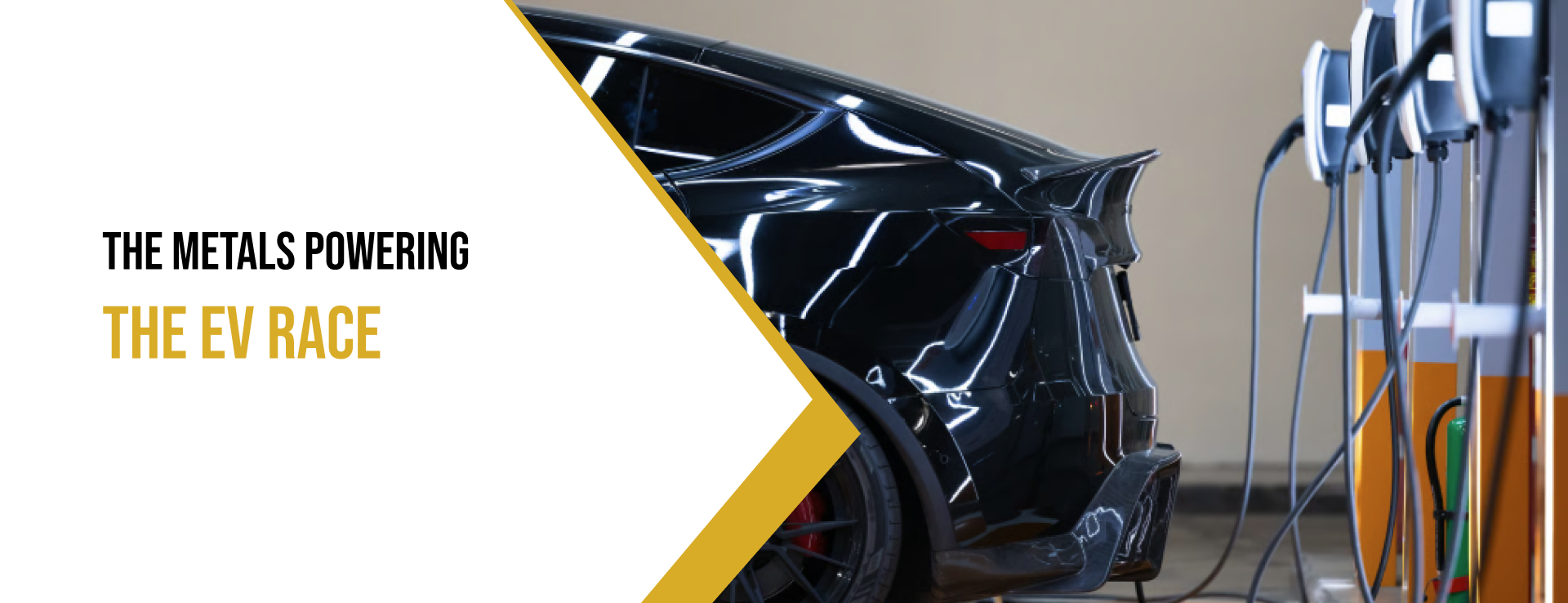

How EV Growth Is Reshaping Lithium and Copper Trade
Electric vehicles don’t run on electricity alone. Behind every EV on the road is a supply chain heavily dependent on metals like lithium and copper. As the EV manufacturing has scaled up in previous years, the global trade flows around both the metals are changing. The center of this transformation belongs to lithium-ion batteries, with copper playing a less obvious yet equally significant role. Their combined role is changing investment cycles, trade routes, and supply risks, and the commodity markets are still figuring out how to adapt to these changes.
The Metals Behind the Movement
An EV battery pack is a lithium intensive product. A standard battery electric vehicle (BEV) requires around 8 kg of lithium per pack, though larger vehicles carry significantly more. Tesla’s Model S battery requires a significant amount of lithium-based materials, with estimates often exceeding 60 kg in lithium carbonate equivalent terms.
Then there's copper. A conventional internal combustion engine vehicle uses roughly 23 kg of copper - mostly wiring. A battery electric vehicle uses around 83 kg. Electric buses can use anywhere from 224 to 369 kg depending on battery size. That gap is substantial, and it multiplies fast when you're counting millions of vehicles per year.
Copper demand from EVs goes beyond the vehicles themselves. EV charging infrastructure, grid upgrades, and the inverters that convert power all consume meaningful quantities. The metal sits throughout the ecosystem, not just on the assembly line.
Lithium Demand now Follows EV Production Plans
About a decade ago lithium was a specialty metal that had very few end users whereas now, its demand is closely linked to electric vehicle production forecasts. Lithium-ion batteries now dominate lithium demand, largely because of EV manufacturing. Electric vehicles control around 65% of the current lithium demand because of the EV production. Not every EV batteries uses lithium in the same manner because the different EV battery chemistries uses the lithium in various forms. Lithium iron phosphate (LFP) batteries that are widely used in China generate lithium carbonate demand.
Then again, the demand for lithium hydroxide is driven by high-nickel batteries which are known for their energy density and stronger capabilities. Both segments are expanding, just at different speeds and through different distribution networks. Lithium exports are also becoming more concentrated. Australia and Chile are still the main producers, but there are a few new players producing less and at higher costs. Concentrated production makes the supply chain more vulnerable to price changes and logistic disruptions, Most of all when the adoption of electric vehicles is accelerating.
Copper Trade: The Invisible Backbone
If lithium is the heart of lithium-ion batteries, then copper is the nervous system. An average EV uses significantly more copper than an internal combustion engine vehicle not just for the motor, but for the extensive internal wiring and the charging infrastructure. Not just that, the copper demand is projected to grow sharply by 2040. The copper trade is facing a structural shift because the metal is a "macroeconomic indicator" that now carries a supply-demand imbalance. Since early 2025, prices have climbed by nearly 14%. Unlike lithium, which has a relatively small, concentrated market, copper for EVs competes with every other sector of the economy, from housing to the traditional power grid. This competition makes the supply chain "robust-yet-fragile", it’s stable under minor stress but highly vulnerable if a few central mining firms face disruptions.
Sustainable Mining is Becoming Important
Environmental concerns are shaping the future mineral trade. As lithium and copper trade volumes grow, so does how carefully both metals are extracted. Over 50% of the lithium and copper production is concentrated in areas with high water stress levels. And that’s a genuine operational risk.
For lithium, the environmental concerns are tied largely to water use in brine extraction. Lithium mining through brine extraction consumes a lot of water and over-pumping groundwater can cause aquifer degradation, fissures, and subsidence. The Atacama Desert in Chile, the driest region in the world, is one of lithium mining's most productive zones. And the tension there is real.
Sustainable mining practices are gaining traction partly because they're becoming important now. The European Union has established regulation concerning batteries that requires carbon footprint declarations for electric vehicle batteries and supply chain due diligence procedures. That means EV manufacturers sourcing materials for European markets now need detailed records down to the mine site. Battery recycling offers a partial solution. Recycled energy transition minerals such as lithium incur 80% less greenhouse gas emissions than primary materials produced from mining. That's not an immediate fix, battery recycling infrastructure is still being built and takes time, but in the long run it will reduce the dependence on new mining activity.
China’s Role
China doesn't just consume lithium, it produces most of it. It controls major portions of mineral refining, battery manufacturing, and EV production. Many countries export raw materials to China, then they’re converted into battery-grade inputs before being used in lithium-ion batteries or exported again as finished battery products. While this has created supply chain imbalance, many countries now want to reduce the dependence on China for processing facilities. However, China built its infrastructure years before many competitors recognized it. That early positioning gave China strong influence over lithium imports, battery material pricing, and parts of the global copper trade network.
The same pattern holds for copper trade. China accounts for roughly half of global refined copper output. It imports copper concentrates from Chile, Peru, and elsewhere, smelts them domestically, and then the refined copper feeds back into its own manufacturing base - including EV motors, wiring, and charging equipment.
This dual control over lithium refining and copper processing means that disruptions in China's industrial output for any reason can ripple through global supply chains in ways that are difficult to work around quickly. The honest read is that China's influence over copper and lithium trade flows isn't fading soon. It took years to build and it'll take years to dilute properly.
What Trade Patterns Suggest Going Forward?
Understanding the trade flows make a few things clearer. First, the geography of lithium exports and lithium imports is slowly starting to diversify. The production of lithium is going to expand significantly with new extraction projects in several countries like South America and Africa. Increased recycling of retired batteries also plays a crucial role in it. Secondly, copper trade is becoming more politicized. Import tariff risk, domestic smelter investment, and supply chain reshoring are all active policy discussions in the US, Europe, and India. The physical copper trade routes are likely to shift over the next decade as more refining capacity is built outside China.
Third, countries with lithium deposits are rapidly realizing that exporting raw ore is not the best position for them over time. Chile, Argentina, and other countries are all looking into ways to retain more value domestically, whether through refining, cathode production, or ultimately battery manufacturing. In 2035, global lithium demand could be between 3.3 and 3.8 million tonnes of LCE. To meet this demand through mining alone, without a recycling infrastructure in place, will require opening a lot of new mines. This is not easy, because mining projects take years to get approval, require huge funds, and face water scarcity in most of the major mining regions.
Wrapping Up
EV growth has changed lithium and copper trade without noise or headlines. It has moved lithium and copper from relatively niche industrial commodities into the center of global trade strategy. The problem is that demand for both metals is growing rapidly, but increasing supply sustainably is far more complex than simply starting up new mines. Sustainable mining is becoming a condition of market access, rather than a preference. Companies that can demonstrate responsible sourcing are finding that it affects their ability to sell into regulated markets. The lithium and copper trade won't look the same in 2035 as it does today. The direction of change is fairly clear. The pace and the specific winners in each part of the supply chain are still being decided.
For businesses tracking shifts in copper and lithium trade, access to reliable market intelligence is becoming increasingly important. Platforms like EX-IM help companies monitor real-time trade data, global shipment trends, buyer activity, and evolving supply chain movements across international markets.
Frequently Asked Questions:
1. Is copper required for electric vehicles?
Yes, copper is highly required for electric vehicles and you can't really replace copper right now. It's found throughout the motor, battery pack, wiring harness, inverters and charging systems.
2. Which metal is mostly used in EV cars?
There isn’t just one dominant metal, but copper and lithium are the most critical. Copper supports electrical flow across the vehicle, while lithium is essential for the battery that powers the EV.
3. How much lithium is needed for an EV?
A standard battery electric vehicle requires around 8 kg of lithium per battery pack, though this varies depending on battery size and chemistry.
4. Why is lithium important for electric vehicles?
Lithium is the main active material inside the battery cells powering all EVs. It is a very light material, with a high energy density and is capable of being recharged over and over again while maintaining a high performance level.
5. Which countries dominate lithium exports globally?
The largest producers of lithium in the world are Australia and Chile, who are providing a significant proportion of raw lithium. Argentina is evolving as a supplier and China is the world's largest provider that dominates lithium refining and battery-grade processing.
Recent Blogs
Top Indian Export by Industry
Discover India's top export companies across 15 industries Get sector level insights key players and what sets market leaders apart
Why Is Trade Intelligence Becoming Non‑Negotiable in Global Trade?
Global trade is now faster riskier and more competitive than ever Here's why businesses that skip trade intelligence are paying a price
What Does Bangladesh Import the Most in 2026?
Discover Bangladesh top import products during April 2025 to March 2026 Also explore the top importers countries import value HS Code and more