
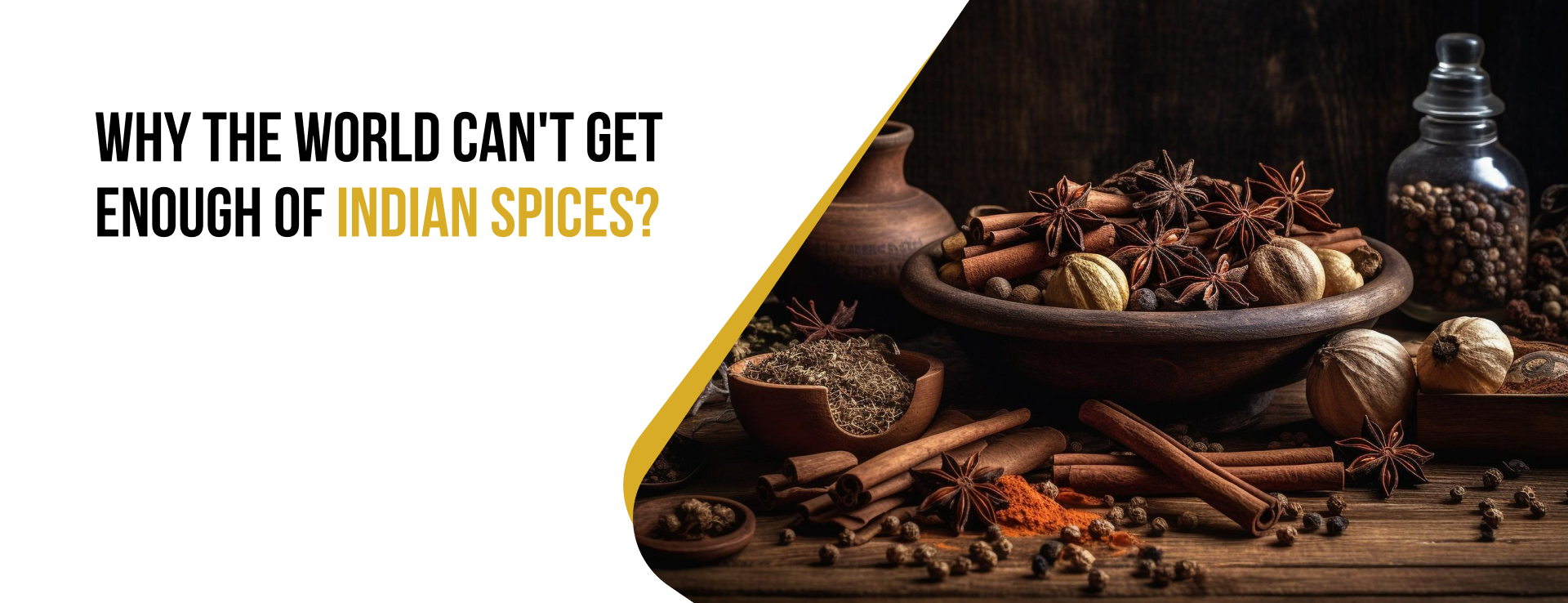

Why Demand for Indian Spices Keep Rising Globally?
India, popularly known as the “Land of Spices”, is the world’s largest spice producer, consumer and exporter. As per FY 24-25, the spice sector alone contributes approximately 9% to India's total agricultural exports and over 40% of horticultural exports. Today, Indian spices have become a regular part of the global supply chain. It exports 225+ unique spice products to over 200 countries making it a trusted global supplier of both raw and value-added spices.
Indian spices have highly gained significant importance for their medicinal properties helping them secure strong visibility in global supermarket shelves, restaurant kitchens, and large food manufacturing units. Earlier they were mainly associated with traditional cooking and regional cuisines. But now, due to India’s consistent supply, spice varieties, scale, and processing capacity, it's gaining demand across different foreign markets.
Factors Behind Increasing Global Demand
The Health and Wellness Shift
Many Indian spices are associated with the traditional wellness systems. Spices such as turmeric, ginger, and black pepper have gained interest among foreign consumers. Turmeric got importance due to the presence of its active compound called curcumin, which has anti-inflammatory and antioxidant properties. The global turmeric market alone was valued at $5.86 billion in 2024. Whereas ginger, with its active compound, gingerol, is used clinically for nausea management. Cumin which is the highest exported product from India in 2024, with an export value of $892,283,350.14 is linked to digestive enzyme activity and blood sugar regulation. Cardamom shows some evidence of supporting blood pressure management and oral health.
The research has connected Indian spices to measurable health outcomes, and that's pulling them into categories well beyond the kitchen. Spices now appear in beverages, supplements, and functional food products. This demand is growing gradually but is meant to be durable.
Flavor Consistency Meets Industrial and Culinary Needs
Indian spices are now not limited to Indian cooking, they’re widely used in different markets in the world. The stable flavor profiles which Indian spices offer are becoming important in commercial use. You will spot many Indian restaurants in most mid-sized cities across Europe, North America, and Southeast Asia. As people eat Indian food outside the home more regularly, they start cooking it at home too.
This creates a demand loop. Once a household stocks cumin or coriander, those spices stay. They stop being exotic and become staple. The US now uses Indian chillies not just in Indian dishes but in Tex-Mex rubs, sauces, and processed snack seasonings. China's Sichuan cuisine, one of the most widely replicated regional cuisines globally, has driven significant demand for Indian chilli. Vietnam uses Indian spices in pho bases and sauces. This adaptability makes Indian spices suitable for diverse markets without adjustments.
Industrial and Processed Food Demand
Most coverage of Indian spice exports focuses on home cooking and restaurants. What gets less attention is how much demand now originates from food processing. The processed food industry is one of the major factors for rising spice demand. Packaged soups, frozen meals, instant noodles, snack seasonings, and ready-to-cook products are some of the sectors that use Indian spices on a very large scale. Besides the mentioned ones, pharma and cosmetics industries are also turning into biggest buyers who use spices. For example, turmeric is a frequently used element in skin care. Cardamom appears in perfumery. These are not just niche markets but represent a growing segment of spice demand that operates entirely outside the food supply chain.
Competitive Pricing with Stable Quality
Indian spices remain competitive which is rarely matched by any other country at certain quality levels. The combination of affordable and consistent supplies with high-quality keeps importers returning rather than shifting to some alternate origin. Efficient farming practices, skilled labour, and optimized supply chains help manage costs. This balance allows buyers to maintain margins without sacrificing consistency. When it comes to quality, India has the infrastructure to produce high-quality spices - regulated processing units, Spices Board certification, and GI-tagged varieties that carry traceability. Buyers who source through verified exporters with documented testing protocols tend to see a meaningfully different quality profile than those buying through less regulated channels.
Wrapping Up
Demand for Indian spices keeps rising because spices are no longer limited to traditional culinary use. They are now connected to processed food manufacturing, restaurant chains, wellness industries, packaged consumer goods, and several industrial applications.
India’s advantage comes from its ability to supply a wide variety of spices at scale while steadily improving processing and export capabilities. At the same time, global buyers are increasingly looking for reliable sourcing partners that can meet quality standards consistently. You can get the detailed analysis of leading Indian spices in the list of Top 10 Varieties Driving the Export of Indian Spices.
If you are into export-import business and want to access the latest shipment data for your next trade, then EX-IM is the right platform for you. Analyzing actual shipment data is a great way to discover active buyers, follow demand trends, and get a grasp on the changing import and export flows worldwide. Besides that, you can book a demo session with us to discover how EX-IM can support your business in finding genuine buyers and suppliers, studying trade patterns, and growing through data-driven market insights.
Frequently Asked Questions:
1. Which is the king of spices in India?
Black pepper is commonly called the “king of spices” due to its historical importance in global trade and wide culinary usage across the nation.
2. Which Indian spices are most exported globally?
Indian spices that are mostly exported in the world are chilli, turmeric, cumin, coriander, cardamom, ginger, and black pepper for their distinct and unique flavors.
3. What are the healthiest spices?
Healthiest spices which are used in medicinal preparations and home remedies mostly include turmeric, ginger, cinnamon, black pepper, cloves, and cumin. They are famous for their antioxidants and anti-inflammatory properties.
4. Why are Indian spices so popular worldwide?
Indian spices are widely popular because they have strong flavor, are available in a wide variety, and stock availability. Besides, their extensive use in processed food, restaurant chains, wellness products, and packaged food manufacturing across many countries contributes to their popularity.
Recent Blogs
Top Indian Export by Industry
Discover India's top export companies across 15 industries Get sector level insights key players and what sets market leaders apart

Why Is Trade Intelligence Becoming Non‑Negotiable in Global Trade?
Global trade is now faster riskier and more competitive than ever Here's why businesses that skip trade intelligence are paying a price
What Does Bangladesh Import the Most in 2026?
Discover Bangladesh top import products during April 2025 to March 2026 Also explore the top importers countries import value HS Code and more