
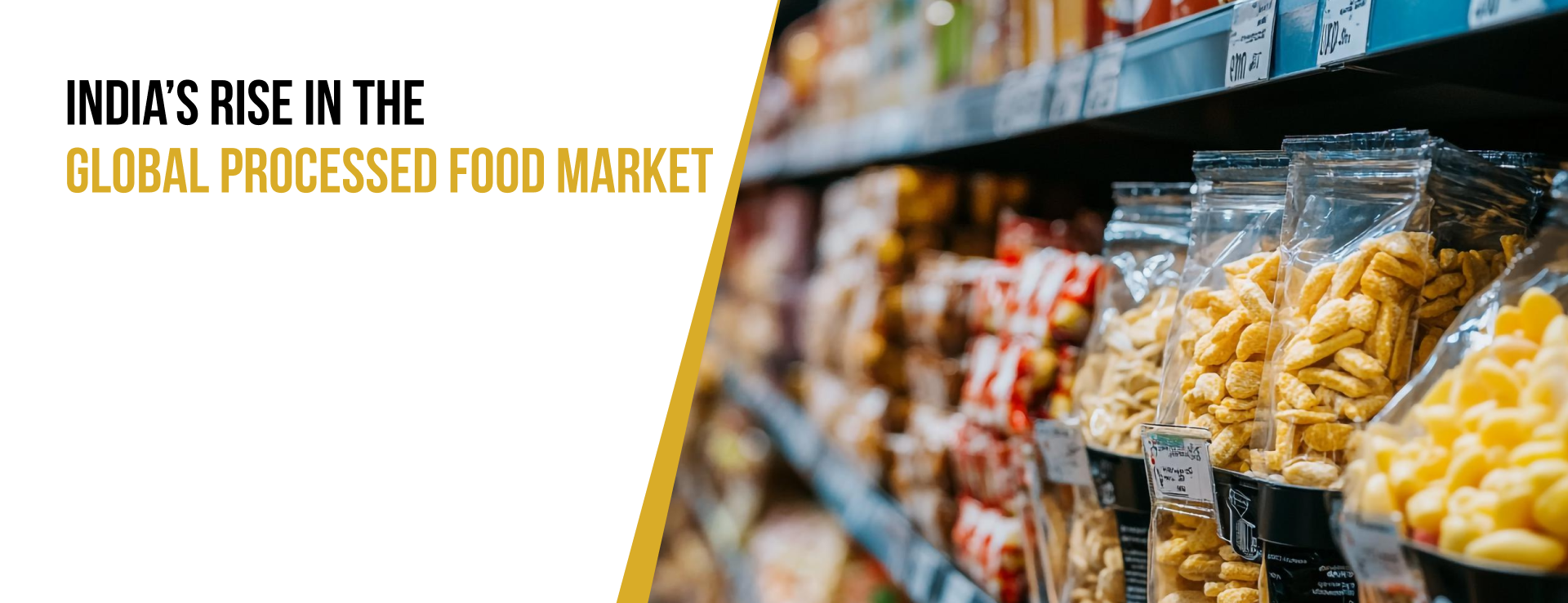

Why Is the World Buying More Processed Food from India?
For decades, India primarily exported raw commodities like bulk grains and unprocessed spices, but that’s changing fast. The country is moving beyond being only a supplier of agricultural produce and becoming a more important part of the global value-added food supply chain. Today, a significant portion of Indian exports consists of value-added products that are peeled, sliced, cooked, or packaged before they ever leave a port.
This shift didn’t happen overnight, it’s the result of changing global consumption patterns, deeper investments in food processing infrastructure, tightening food safety standards, and stronger links between farms, factories, and foreign buyer base that's actively looking for affordable, reliable sources of processed food. India is able to tick several of those boxes at once.
The Global Shift Toward Processed and Convenience Foods
People everywhere are becoming time-sensitive today which has led them to steadily move towards increased consumption of processed food due to its convenience. Urbanization is a big reason for it. When people live in cities and work longer hours, they want food that's quick to prepare or ready to eat. This is truly evident in countries like the US and Europe, but now growing faster in parts of Africa, Southeast Asia, and the Middle East as well.
The global processed food market is projected to reach approximately $2.2 trillion by 2026. The largest contributors to this value are typically processed meat and poultry, dairy products, and "ready meals" (instant food). As global consumer habits are shifting toward "shelf-stable" and "heat-and-eat" formats. In cities from London to New Jersey, the preference for convenience isn’t just about laziness but it’s a logistical necessity for busy households. This shift has created a massive opening for countries that can provide high-quality, pre-prepared meals at scale. India is one of the few countries that can supply at large volumes, across a wide range of categories, with cost structures that most Western suppliers can't match.
Why is the World Buying More Processed Food from India?
India offers a rare combination of massive varieties and cost efficiency without compromising on the quality. Not only that but several factors are driving the global rise in demand for processed food products from India, making the country an increasingly important supplier in international food trade.
Competitive Pricing
Price is usually the first thing that gets a buyer's attention, and India's cost structure is genuinely difficult to match. Labour costs in food processing remain significantly lower than in Europe, North America, or even parts of Southeast Asia. Raw material costs are equally controlled - India grows most of what it processes domestically, so there's no expensive import layer built into the cost of production. For a buyer comparing bids from five different countries, Indian quotes tend to land in a range that's hard to walk away from. That doesn't mean buyers choose India on price alone, but it almost always keeps India in the conversation.
Improved Infrastructure
A few years ago, cold chain gaps and inconsistent processing facilities were genuine problems for Indian food exporters. That's been changing. Investment in Mega Food Parks, cold storage networks, and export-oriented processing units has made a measurable difference. More facilities now hold internationally recognized certifications which matter enormously to buyers in regulated markets. An EU or UK importer can't work with a supplier whose plant doesn't meet basic audit requirements, no matter how competitive the price is. Indian exporters who've invested in compliance infrastructure are now passing those audits, and that's what's opening doors.
Demand for Indian Ethnic Ingredients
Global food culture has shifted considerably. Turmeric, curry pastes, tamarind, moringa, amla, ghee - these were niche ingredients a decade ago outside South Asian communities. Now they're in mainstream grocery stores, restaurant supply chains, and food manufacturing inputs across the US, UK, Europe, and the Gulf. The Indian diaspora created the initial demand and built the distribution pathways. But the broader consumer curiosity about South Asian flavours has kept that demand growing well beyond ethnic grocery aisles. For buyers of processed foods, India is simply the most logical source for these high-quality ingredients at scale - no other country comes close in terms of volume, variety, or authenticity.
Access to Ready to Eat Product Globally
India's export story stands out the most in the ready-to-eat segment. Indian ready-to-eat meal exports - curries, dals, rice dishes, and breakfast items have recently entered the UAE, UK, the US, Canada, and Australia supermarkets. Some of this is due to the diaspora buying patterns, but an increasing share is the acceptance of mainstream consumers. Busy households seek quick meal solution that takes them beyond the usual choices, and Indian cuisine is a great fit for shelf-stable or frozen products as it hardly loses its essence. Besides, Indian manufacturers have also improved export packaging, leading to longer shelf lives, labelling conforming to standards, and portion sizes matching international markets.
Strong “Brand India” Recognition
India has built genuine credibility as a food origin over decades. Buyers in the Gulf, Southeast Asia, and among diaspora communities in the West already associate Indian-origin products with certain standards, particularly for spices, rice, dairy, and traditional food products. That recognition reduces friction in the buying process. Government-backed initiatives like the "Brand India" campaigns run through APEDA have reinforced this image in international trade circles. It doesn't guarantee a deal, but it means Indian suppliers often walk into conversations with a degree of credibility that newer export origins have to earn from scratch.
Diverse Product Range
Few countries can match what India processes and exports. From mango pulp and frozen vegetables to dairy products, instant noodles, organic powders, pickles, snack foods, and marine products - the range is genuinely wide. That diversity practically matters to buyers. A distributor covering multiple retail categories, or a food manufacturer sourcing ingredients across several product lines, would rather consolidate suppliers where possible. Being able to source six or eight different product categories from one country and potentially from a smaller set of vetted suppliers reduces purchasing complexity. India's agricultural diversity, combined with its growing processing capacity across regions, makes that kind of consolidation possible in a way that few other origins can offer.
Major Markets for Processed Foods
The US is still a major destination for India's processed food products. Indian ready-to-eat items, frozen foods, pickles, chutneys, and organic food products have even been allowed shelf space in major grocery store chains in the USA and don't just remain confined to ethnic grocery stores anymore. The UK is also a growing market for ready to eat meals, sauces, and bakery products inspired by Indian flavors. The Gulf Cooperation Council (GCC) region is also among India's top markets in processed food. The UAE, Saudi Arabia, Kuwait, and Qatar import large quantities of Indian packaged snacks, dairy products, spices, and ready-to-eat meals. Indian food brands enjoy high brand awareness here, partly driven by the presence of a large South Asian expat community.
Processed Food Categories Seeing Strong Global Demand
Ready-to-eat and ready-to-cook Indian foods: Products in this category especially curries, rice dishes, meal kits, and instant mixes continue to see a strong global demand.
Processed fruits and juices: It is also a major category, mango pulp is perhaps the most well-known - India exports it to over 50 countries. Tomato paste, frozen peas, dehydrated onions, and drumstick (moringa) products are all moving in volume.
Frozen vegetables: Frozen foods are growing steadily too. Frozen vegetables, snacks, and breads are easier to transport and store compared to fresh products.
Dairy products: Paneer, ghee, and processed cheese, are growing exports. Gulf markets and the Indian diaspora globally keep demand steady. Some categories like ghee have also found non-Indian consumers interested in it as a cooking fat.
Pickles, sauces, chutneys, and confectionery: Indian namkeens, biscuits, and extruded snacks - have a loyal consumer base among diaspora communities and are slowly crossing over to broader consumer segments in some markets.
Health-oriented and fortified foods: These also come under rising segments. Moringa powder, turmeric supplements, amla products, and organic pulses from India have gained traction in health-focused retail in North America and Europe.
Wrapping Up
The growth of processed food exports from India reflects a broader shift in global food trade. Buyers today are looking for convenience, stable supply, value-added products, and diversified sourcing options. India perfectly fits those requirements across multiple categories. The country’s agricultural strength has always been significant. What is changing now is the level of processing, packaging, manufacturing, and export capability built around that foundation.
For exporters, manufacturers, and traders, understanding where demand is rising and which markets are actively importing specific processed food products has become increasingly important. Trade intelligence like EX-IM can help your businesses track these shifts more accurately, identify active buyers, and study market demand patterns at deeper levels.
Book a demo today to explore how global trade data can support various export opportunities!
Frequently Asked Questions:
1. Which country eats the most processed foods?
The USA is the largest consumer of processed food items worldwide followed by countries like the UK, UAE, and Saudi Arabia.
2. What is the unhealthiest food item?
While "unhealthiest" is subjective, many nutritionists point to sugar-sweetened beverages (like sodas and energy drinks) as a top contender. They provide "empty calories" with zero nutritional value and cause immediate blood sugar spikes.
3. Is processed food from India safe and up to international standards?
Absolutely. In recent years, there’s been a massive push toward global certifications like ISO and HACCP. Export-oriented units in India now regularly pass strict audits from the US FDA and European regulators, which is a big reason for them being exported.
4. What processed food products are most exported from India?
Ready-to-eat meals (like dals and curries) are the stars, but frozen snacks like samosas and parathas are also in demand, mango pulp is another giant, being used in juices and desserts worldwide, along with "superfood" items like turmeric and moringa-based products have gained importance.
5. How can I find active buyers for Indian processed food?
To find active buyers for processed food items, using trade intelligence platforms like EX-IM is an ideal solution. EX-IM lets you see exactly who is buying what, in what volume, and from which suppliers.
Recent Blogs
Top Indian Export by Industry
Discover India's top export companies across 15 industries Get sector level insights key players and what sets market leaders apart
Why Is Trade Intelligence Becoming Non‑Negotiable in Global Trade?
Global trade is now faster riskier and more competitive than ever Here's why businesses that skip trade intelligence are paying a price
What Does Bangladesh Import the Most in 2026?
Discover Bangladesh top import products during April 2025 to March 2026 Also explore the top importers countries import value HS Code and more