
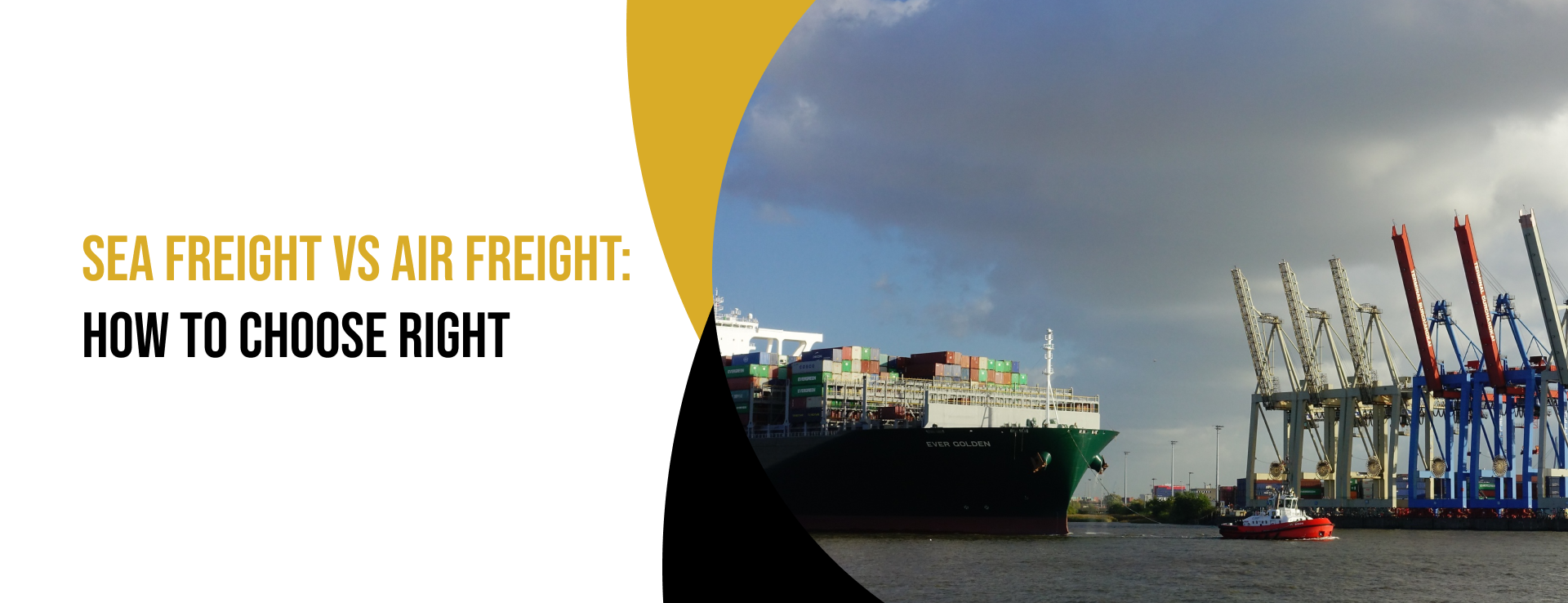

Sea Freight vs Air Freight: How To Choose Right
Sea Freight or Air Freight? This is one of the most common confusions for many of the importers and exporters around the world. While both are widely used in global trade, each option serves different business goals. But if you choose any of them without thinking, you might wipe your entire profit margin on shipping costs alone. This is the reason why sea freight and air freight deserve more attention than a quick Google search. So, what truly suits your business? The answer is not simple as it doesn’t depend on the shipping process alone, but on how well it aligns with your priorities.
What Is Sea Freight vs Air Freight?
Sea freight, which is also called ocean freight, is the transportation of goods by cargo ships through waterways. You can call it the backbone of global trade because 90% of internationally traded goods are moved through the sea. Whereas air freight uses aircraft to transport goods and is the fastest way to choose during an emergency. Traders usually choose this method for time-sensitive and for high-value shipments. Both methods serve different purposes, and one wrong choice can result in delays, damaged cargo, or missed market opportunities.
Which One Should You Choose? The Answer Isn’t Simple - Here’s how to Decide
To know which shipment method fits well, understand your priorities first. This is because the real deciding factors depend on urgency, your budget, and the nature of goods. Let’s see in-depth what matters most while making the decision:
Cost vs Urgency
Air freight is faster and reliable for high-margin products, or when shipping needs to be under a tight time bracket. But here’s the catch, it is 4-6 times more costly than sea freight. Whereas sea freight is cost-effective for bulk shipments, it takes longer than air freight. If you have done poor planning for shipments, it’s obvious that would cost you more, as it forces you into air freight. However, if it’s urgent and your priority is time, you must choose air freight and choose sea freight with proper planning to avoid paying more.
Nature Of The Goods
It’s very important to understand the nature of the goods, as it highly influences the shipment choice you make. It is because sea freight is more flexible for goods that are oversized, hazardous, machinery, furniture, and includes heavy cargo etc. Whereas air freight shipping has strict weight and dimension limits, which is ideal for perishable items like flowers, food, medicines, electronics, and high-value items.
Shipment Volume And Size
If your focus is on profit, then the first thing you should look into is the shipping method. This is because the shipping volume directly affects the profit margins, as it is one of the most overlooked factors in the sea vs air debate. Sea freight is more cost-effective at scale, for e.g. once your shipment crosses 500 kg, it's more inclined towards sea rather than air freight. It is ideal for bulk cargo where cost per unit matters. Air freight, on the other hand, works better for small, high-value shipments where speed justifies the higher cost per kg.
Destination And Route Availability
It’s very important to note that not all routes are the same. Your end destinations may not have seaports and frequent cargo flights, which can sometimes impact shipping costs and transit time. In such situations, importers and exporters need to choose the most reliable method available, based on their requirements.
Customer Expectations
In global trading, it is important to know your customer before you book the shipping. This is because the shipping choice is highly dependent on the customer's expectations, as it is not just about which mode is faster or cheaper. It's about which mode matches the rhythm of your customer’s needs. If your sales depend on high-speed revenues and repeat orders, then air freight keeps you competitive. But if your focus is on volume, consistency, and pricing, then sea freight is ideal.
Impact on Profit Margins
Harsh but true - choosing a wrong shipping method can entirely eliminate your profit margin or even worse. That’s why it's important to follow a balanced and hybrid approach that stabilizes margins and operations. Most importers and exporters don’t just rely on one mode of transport method but use sea freight for bulk shipments that keeps cost low and protects margins. Whereas they keep air freight for urgent, high-value, or time-sensitive goods. This ensures that neither speed nor cost is compromised completely.
Let’s Understand with Numbers
Let’s imagine that you are importing 1,000 kg of textiles from India to China. Sea freight costs you Rs. 50/kg. That’s a total of Rs. 50,000 and this will take 25 days. Then, if someone suddenly panics and decides to book the goods by air freight, the cost goes up to Rs. 250/kg. That’s a total of Rs. 2,50,000 for the exact same goods but arriving 22 days prior. The difference of Rs. 2,00,000 spent on urgency that was never really there. In a textile import where the profit margin may be thin, this call can make all the difference between profit and loss. This is exactly why freight decisions deserve more thought than last-minute booking.
Common Mistakes to Avoid
1. Choosing Air Freight Unnecessarily
You can call it one of the most expensive habits in global trade because when suppliers delay the dispatch, importers instantly switch to air freight. It becomes the instant fix but with a cost that kills the profit margin, especially for low margin goods like apparel or household goods. A smarter way would be to plan your shipments via sea freight, and air freight only when the nature of goods matters or urgency is genuine.
2. Ignoring Hidden Costs
Remember that the base freight charge is only part of the story. Additional charges often come from terminal handling, port fees, customs cost, and inland transport in sea freight. On the contrary, air freight adds fuel charges, security fees, and peak season premiums. It’s always best to check the total cost before comparing the two modes, as the mode that looks on the surface is often not.
3. Poor Planning of Shipment Timelines
Poor planning of shipment timelines can drastically reduce up to 70% logistic disruptions which delays the process. And these delays are not due to transit but because of late bookings, document issues, supplier delays, customs inspections, and much more. Always consider keeping buffer time into your shipment plans and treating your logistics timeline as serious as the production timeline especially for sea freight.
Before choosing any freight mode, always look at your priorities and look for these metrics: speed, cost, product type, urgency, profit margins, route availability, shipment volume, and most importantly, your customer expectations. But the real secret to choosing the correct metrics is having accurate data, real-time insights, and expert guidance. With 13+ years of trade expertise, EX-IM gives you all that you need across 181+ countries. So, if you’re an importer or exporter who is looking for smarter shipping solutions backed by verified trade data, then EX-IM trade intelligence tool is what you need. Get in touch with us today and level up your trading game!
Get Access To Trade Data
Frequently Asked Questions (FAQs)
1. Which Is Cheaper, Air Freight or Sea Freight?
Sea freight is way cheaper than air freight, especially for bulk and heavy shipments. This method is best when you plan it properly to reduce logistic expenses otherwise you might delay the shipments.
2. What is the most profitable freight?
This is the most common question and it totally depends on your product and business model. There is no specific freight but what you look at like sea freight is more profitable for bulk, low-margin goods, while air freight can be more profitable for high-value and where speed drives revenue.
3. Is air freight always safer than sea freight for fragile goods?
Yes, air freight is safer than sea freight because of less handling and a much shorter transit time. However, with proper crating and containerization, sea freight is perfectly safe for most fragile industrial goods.
4. What is LCL vs. FCL in sea freight?
FCL means Full Container Load, and LCL means Less than Container Load.
5. When should you choose sea freight over air freight?
You should choose sea freight for smarter shippings and when you are shipping large volumes, or heavy goods. It helps reduce shipping costs and protect profit margins, especially when delivery timelines are flexible for you.
Recent Blogs

Best Products to Export Based on Global Demand 2026
Discover best products to export in 2026 based on global demand and market opportunities Identify highdemand products and top export markets
India’s Import Export Data: Everything You Need to Know in 2026
Trade data isn't just numbers Discover how Indian businesses use importexport data to find buyers track competitors and much more in 2026
CIF vs FOB vs EXW Explained for Beginners
CIF vs FOB vs EXW explained for beginners learn what each Incoterm means who pays for what and when risk transfers in international shipping